12 Nov
online
The Inclusive Classroom: Adapting your teaching for students from disadvantaged backgrounds.
Session two of the Inclusive Teaching Series

Tudor Grange Research School
—
Blog
Using Strong Relationships to Inform Pupil Premium Strategy and Implementation

Share on:

by Tudor Grange Research School
on the

Lynn explores how putting relationships, belonging and a deep understanding of children at the heart of Pupil Premium strategy can help schools make a lasting difference and improve implementation.
Lynn is Headteacher of a large junior school in North Solihull and ELE at Tudor Grange Research School.
Walk into any school and you’ll find learning, questioning and growth. Look a little closer and you’ll notice something equally important: trusted relationships and a strong sense of belonging.
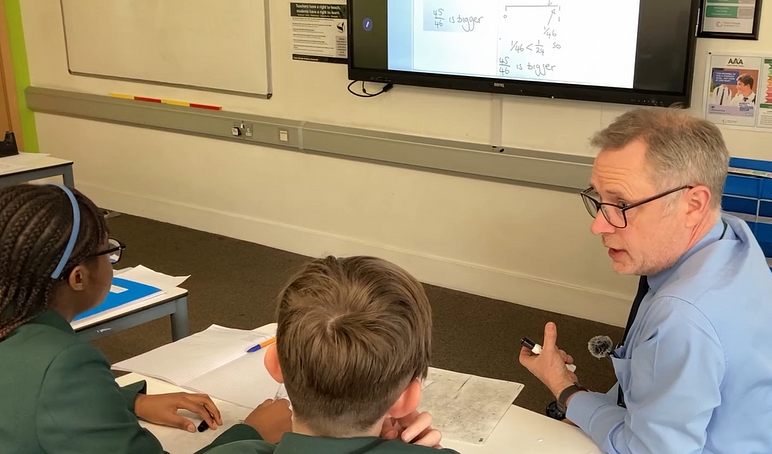
You’ll see children being greeted warmly by name at the school gate. You might overhear a Child and Family Support Worker chatting to a child about a party invitation from the weekend, or a Learning Mentor encouraging a pupil to join a lunchtime board game and widen their friendship group. These moments may seem small, but they matter.
When we discuss our Pupil Premium strategies, there is often a focus on attendance, behaviour and attainment data. Of course, these things are important, but children do not experience school as a data dashboard. They experience it through people, trusted relationships, connections and a sense of belonging. These relationships help children feel valued, but they also provide some of the most important information school leaders need to plan the right support, at the right time.
Engage people so they can shape what happens while also providing overall direction.
The EEF’s implementation guidance tells us that what happens before implementation matters. Before we decide on solutions, we need to understand the problem. Yet too often, Pupil Premium strategies are written by a small group of school leaders and then shared with everyone else afterwards. Too often, the staff who know children best are absent from these important conversations.
No single person can hold all the information needed to understand the challenges children and families face. Some of the richest insights sit with teachers, teaching assistants, child & family support workers and mentors. They know the stories behind the spreadsheets. As school leaders, we need curiosity as much as we need data. Data tells us where to look, but trusted adult relationships help us understand the why.
If the challenges are not clearly understood, the subsequent activities are likely to be muddled and lacking precision.
Those adults who know children best are often the first to spot the small signs that show implementation is working. Successful implementation relies on engaging with the people who will deliver it because they help us understand what progress looks like. After all, implementation is not something we do to people; it is a collaborative and social process that happens with people.
When strong relationships inform implementation, we are far more likely to make a lasting difference to the children who need us most.
Unite people around what is being implemented, how it will be implemented, and why it matters.
So, when you’re writing your Pupil Premium Strategy, don’t do it alone! Talk with the people who know your children best and explore potential barriers together. Use their insights to shape not only what you do, but how you do it. Discuss what success might look like after six weeks, six months and beyond.
The most effective Pupil Premium Strategy is not simply about funding. It is about creating a school culture where every child feels known, valued and understood.
The most effective Pupil Premium Strategy is not simply about funding. It is about creating a school culture where every child feels known, valued and understood.
Perhaps the key message for success with our Pupil Premium strategy is not simply about choosing the right intervention. It’s about understanding children deeply, engaging with those adults who know them best and working together with purpose to create a school culture where children feel known, valued, understood and that they truly belong.
Department for Education (2026) School belonging and attainment at key stage 4. Available at: https://www.gov.uk/government/…
Department for Education (2026) Using pupil premium: guidance for school leaders. Available at: https://www.gov.uk/government/…
Department for Education (2026) Working together to improve school attendance. Available at: https://www.gov.uk/government/…
Education Endowment Foundation (2024) Build a culture of community and belonging for pupils. Available at: https://educationendowmentfoun…
Education Endowment Foundation (2026) The EEF Guide to the Pupil Premium. Available at: https://educationendowmentfoun…
12 Nov
online
Session two of the Inclusive Teaching Series
Tudor Grange Research School
03 Dec
online
Session three of the Inclusive Teaching Series
Tudor Grange Research School
14 Jan
online
Session four of the Inclusive Teaching Series
Tudor Grange Research School
This website collects a number of cookies from its users for improving your overall experience of the site.Read more