Home

Research School Network: Check. Adapt. And move learning forwards How simple changes to our practice can have real impact on our pupils.

Blog


Check. Adapt. And move learning forwards

How simple changes to our practice can have real impact on our pupils.

by Newcastle Research School
on the

Sarah Pic

Sarah Stock

Newcastle Research School

Sarah is the Director of Newcastle Research School and the Primary School Improvement Lead for NEAT Academy Trust.

Read more aboutSarah Stock

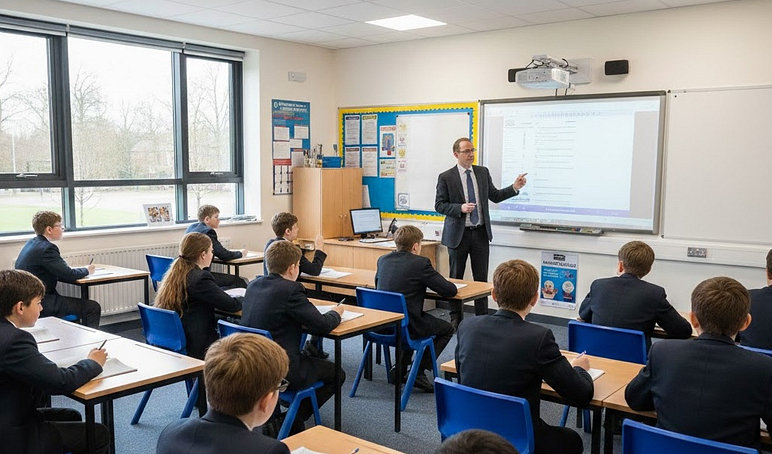
Imagine this scenario:


Thomas, a less confident pupil who rarely spoke in maths lessons, was always seated next to James a more confident mathematician who didn’t mind sharing his answers.

In a recent maths lesson, the year 6 class were rounding numbers to the nearest 1,000. The task on the board was to round 54,363 to the nearest 1,000. Rounding was a tricky area of maths for Thomas and so he relied on James for the answer, noting it correctly in his own book.

The teacher was unaware that Thomas was struggling.

Assessment not assumption


In the What Makes Great Teaching’ Report (2014) Professor Rob Coe identifies many poor proxies of learning within the classroom. This list highlights assumptions that we as teachers may hold which include: 

  • working silently,
  • finishing a task,
  • behaviour being good.

Using these poor proxies as an indicator for learning can be misleading as we do not know what is going on in a pupil’s mind. The learning is not visible and therefore hidden for teachers to be able to intervene and further develop or extend.

Making learning visible


Now imagine this scenario:

Drawing upon the EEF’s research evidence the teacher knew the importance of using assessment to build upon what pupils already know. At the start of term, the year 6 teacher had carried out a 1:1 diagnostic assessment focusing on number and place value. The diagnostic assessments were valuable to support starting points within planning and pre-empting potential misconceptions. They also highlighted pupils who may need further support within a lesson. Thomas was one pupil who was identified as less confident in rounding to the nearest 1,000.

The use of mini whiteboards


Within the lesson the teacher shared the calculation on the board, rounding 54,363 to the nearest 1,000. The teacher modelled a strategy utilising a number line as a scaffold, as well as clear steps for pupils to follow. All pupils were asked to write answers on their mini-whiteboards and then show their answer. The teacher could then instantly see which answers were right and wrong. The teacher purposefully asked Thomas to explain why the answer was 54,000 as they knew he was less confident in this area. This gave the opportunity to focus on the process Thomas had used and not just the written answer to ensure than he was confident before moving forwards.

The use of assessment before and during lessons is key to be able to plan for adaptations to support learning. During lessons we need to create opportunities to make learning visible so that we can check in and re-adapt if needed before moving on.

Reflections


  • How do you check pupils’ understanding within the lesson?
  • How do you adapt your teaching and resources within the lesson for those children who need it?

Further reading


EEEF’s Teaching and Learning Toolkit – Feedback Education Endowment Foundation (2017) Improving Mathematics in Key Stages 2 and 3: Guidance Report. London: Education Endowment Foundation. Available at: https://educationendowmentfoundation.org.uk/education-evidence/guidance-reports/maths-ks‑2 – 3

Coe, R., Aloisi, C., Higgins, S. and Major, L.E. (2014) What makes great teaching? Review of the underpinning research. London: Sutton Trust. Available at: https://www.suttontrust.com/wp-content/uploads/2014/10/What-Makes-Great-Teaching-REPORT.pdf

This website collects a number of cookies from its users for improving your overall experience of the site.Read more