Home

: Strong Foundations, Stronger Futures: Putting Inclusive Teaching at the Heart of Post-16 Strong Foundations, Stronger Futures: Putting Inclusive Teaching at the Heart of Post-16

Blog


Strong Foundations, Stronger Futures: Putting Inclusive Teaching at the Heart of Post-16

Strong Foundations, Stronger Futures: Putting Inclusive Teaching at the Heart of Post-16

NTR snip

Nicola Torr

Curriculum Area Leader for Business, Economics and Law

Read more aboutNicola Torr
AST

Ann-Marie Smethurst

Curriculum Area Lead for Psychology, Health and Education

Read more aboutAnn-Marie Smethurst

Strong Foundations, Stronger Futures: Putting…


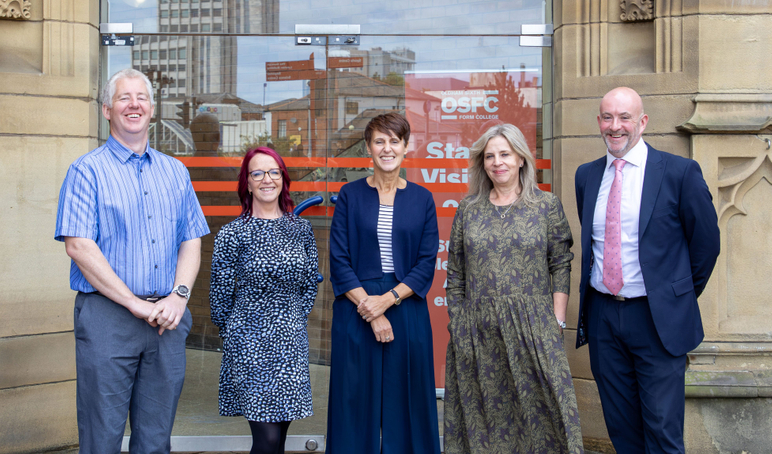
At Oldham Sixth Form College (OSFC), where 76% of students come from disadvantaged postcodes, inclusive teaching is central to ensuring every young person can thrive. In this blog, Nicola Torr, Curriculum Area Leader for Business, Economics and Law, and Ann-Marie Smethurst, Curriculum Area Leader for Psychology, Health and Education, share how OSFC has been putting inclusive teaching at the heart of its post-16 strategy. They explore how evidence-informed practice, professional development and a sharper focus on student needs are helping staff reflect on their teaching and identify opportunities to improve outcomes for all learners.

The ​“Growing apart – The evolution of the disadvantage gap” EEF report suggests that the attainment gap for disadvantaged pupils grows over their time in education, resulting in the largest attainment gap by the time pupils are in 16 – 19 settings. Reading this reinforces the vital role we play as leaders at a sixth form college in one of the most disadvantaged boroughs in the country. It highlights our responsibility to champion inclusivity and ensure every student feels valued, supported, and included. It has prompted us to pause and consider our practice. We can give multiple examples of individual success stories that indicate we are doing a great job; but what does the data actually show and are we missing any opportunities to reduce the gap?

Diagnosing Pupil Needs


We began with an in depth analysis of how inclusion data was presented and how accessible it was to all staff. To strengthen our graduated response and increase staff confidence, we standardised the categorisation of inclusion groups. Data that highlighted gaps for disadvantaged groups was put front and centre of our results analysis process, giving Course Leaders clarity on how they could lead their teams in ensuring that they know every student’s need and what adaptations are required beyond the universal offer. This provided a clearer starting point for identifying priorities based on evidence rather than assumptions.

Developing the strategy


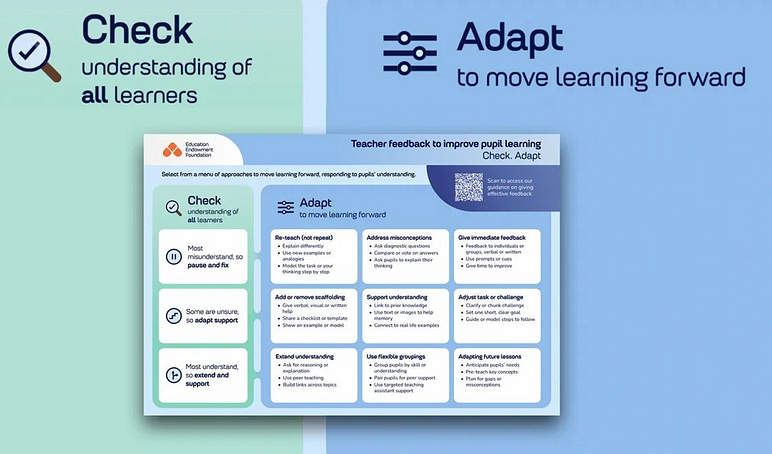
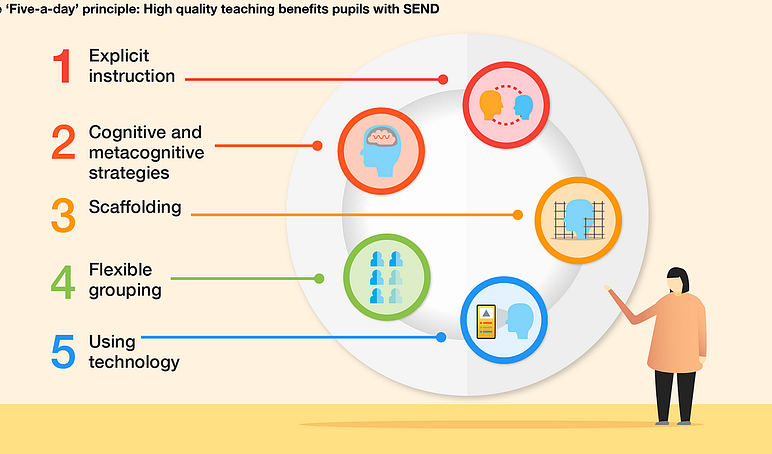
Our next step was to utilise the EEF tools to equip teachers with evidence-based approaches that would make a difference in their classrooms. Knowing that ​“what is effective for most students is essential for some”, we used our existing in-house CPD sessions to embed more specific examples. Time was allocated within training to focus on how strategies from the ​“Five a Day” approach, such as explicit instruction, metacognition and scaffolding, can be utilised to specifically support disadvantaged learners. This was enhanced with full staff training focussing on the EEF’s ​”Check. Adapt.” resource at the start of the academic year, giving teachers the confidence to plan evidence based inclusive teaching.

From evidence to action


In line with the KEEP framework for effective professional development in 16 – 19 settings, we took this foundation back to subject teams, where we had built in time to plan when, where and how the techniques learned in training sessions could address disadvantage gaps. Teachers reflected on their practice and took ownership for translating the evidence into their individual classroom contexts. Inspiring success stories presented by peers gave practical exemplification of how these approaches are used in classrooms. Using the ​“Reflecting on your practice: Every teacher as a teacher of SEND” tool teams began to identify strategies that could be further embedded to support students with SEND whilst reinforcing the message that high quality teaching is essential for all students.

Crucially, implementation is not a one-off training event
. Subject-team discussions provide opportunities to share practice, address barriers and reflect on what is working. By connecting professional learning with everyday teaching, we aim to build shared responsibility for inclusion and support consistent practice across the college.

Inclusion at the heart of…


Having established clarity through data, embedded evidence-based approaches, and empowered our teams to take ownership, we have built a solid foundation for lasting impact. But this is just the beginning. Our next step is to monitor whether these changes are influencing classroom practice and improving students’ access to learning, using existing evidence and outcomes to identify where we need to adapt our approach.

This reflects the EEF’s emphasis on implementing, monitoring and sustaining inclusive teaching.

Our mission of transforming the lives of our young people remains strong and central. By embedding inclusive teaching within our post-16 strategy and ongoing professional development, we can ensure support is purposeful, barriers are addressed and every student, regardless of background or starting point, has access to high-quality teaching and the opportunity to succeed.

Top Tips: Making Inclusive Teaching…


Our experience at OSFC has reinforced four key lessons for leaders seeking to make inclusive teaching part of everyday practice:

  • Start with the evidence. Use attainment and inclusion data to identify gaps, understand students’ needs and prioritise action.
  • Make professional development practical. Connect evidence-based strategies to real classroom challenges, with time for teachers to plan and practise.
  • Build ownership through teams. Give subject teams opportunities to share effective practice, reflect together and adapt approaches to their students.
  • Monitor, adapt and sustain. Revisit implementation regularly, use existing evidence to evaluate progress and embed inclusive teaching in everyday practice.

This website collects a number of cookies from its users for improving your overall experience of the site.Read more