Blog
Cross-phase
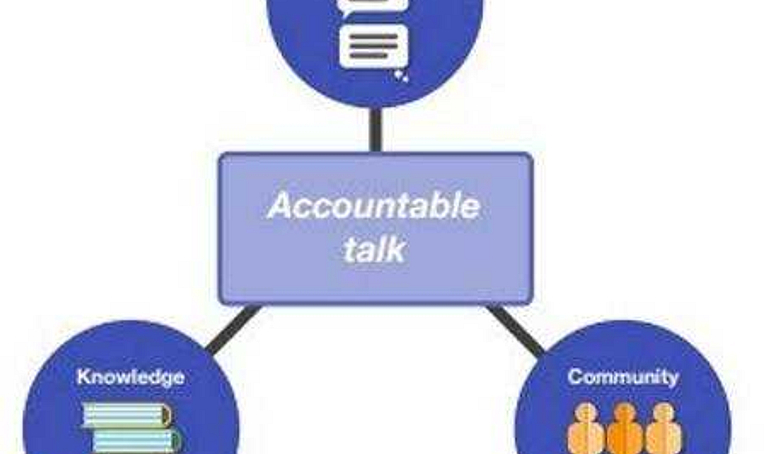
Accountable Talk - reflecting on our clip from the classroom example
In this blog, Deputy Director Jody Chan explores how she has been using the EEF's guidance on accountable talk in the classroom
Ben Crockett
—
Blog
There is a growing recognition of the link between belonging and outcomes; but why and how much does it really matter?

Share on:

by Durrington Research School
on the
In recent years, there has been growing recognition of the role belonging plays in shaping a range of outcomes for young people. Following the Government’s Schools White Paper earlier this year, belonging has become an increasingly prominent theme among educators and policymakers.
The thing is, belonging feels like a slippery concept. We have probably all experienced situations in which we didn’t feel we belonged, but quantifying this feeling and understanding how a sense of non-belonging might be addressed is far from straightforward. Understanding the causes and consequences of belonging in the complex and varied world of schools is therefore challenging. However, this challenge cannot be a reason for inaction. Research suggests that belonging is more than simply something nice for pupils to experience; it is also associated with academic success.
In August this year, the DfE published its research report, School belonging and attainment at key stage 4. This was followed in October by the School belonging case studies research report. Both reports are interesting, if slightly lengthy, reads. They offer some intriguing insights into belonging, providing evidence of its association with academic attainment, particularly for disadvantaged pupils, alongside practical insights into how schools can foster a greater sense of belonging.
The theory of belonging
Belonging is conceptualised as a fundamental human need and is believed to be closely linked with motivation, engagement and subsequently attainment. According to Maslow’s Hierarchy of Needs (1943) belonging is a requirement that sits between basic physiological and safety needs; and higher order needs of esteem – therefore a sense of belonging is determinate for students’ level of cognitive engagement and learning.
Furthermore, according to Dec and Ryan’s (1985) theory of self-determination suggests that belonging aligns with the human need to feel connected to, care for and valued by others. Pupils who have positive relationships with all aspects of school life, therefore fostering a greater sense of belonging are more likely develop a strong commitment to learning. On the flip-side low belonging perceptions have been found to predict absenteeism and drop out (Allen et al, 2018).
The findings of the DfE report
The DfE’s research draws on data from 4,763 pupils across 165 schools in England who completed the PISA assessment and student questionnaire. The report uses two different measures of belonging drawn from this questionnaire.
1. A composite belonging index, based on pupils’ responses to six statements:
– “I feel like an outsider (or left out of things at school).”
- “I make friends easily at school.”
- “I feel like I belong at school.”
- “I feel awkward and out of place at my school.”
- “Other students seem to like me.”
- “I feel lonely at school.”
2. A single-item measure, based on pupils’ responses to the statement “I feel like I belong at school”. Responses were recorded using a four-point Likert scale, ranging from strongly agree to strongly disagree. The report argues that this measure provides a more direct and interpretable indicator of pupils’ perceived belonging.
The report found that 63% of pupils felt they belonged at school. At first glance, this figure might seem reasonably encouraging. However, it also means that more than a third of pupils did not report feeling that they belonged. Put another way, this is close to four in every ten pupils — a finding that is rather damning.
The report also found a clear association between school belonging and academic attainment, even after accounting for pupil background, prior attainment and experiences of bullying. Pupils who agreed that they belonged at school, based on the second measure above, had significantly higher attainment than those who disagreed. The modelling suggests that moving from strongly agreeing to strongly disagreeing on the belonging scale could be associated with an eight-point decrease in Attainment 8 scores.
Beyond these headline findings, the report identified several other interesting patterns:
a) Boys were more likely to report feeling they belonged at school with 66.4% of all boys and only 58.09% of girls reporting that they felt they belonged at their current school.
b) Pupils eligible for free school meals (FSM) were less likely to report a sense of belonging, with only 58.2% doing so.
c) Pupils with SEN also reported lower levels of belonging. Some 56.62% agreed that they belonged at school, compared with 62.98% of pupils without SEN.
d) Reported levels of belonging varied by ethnicity, with White pupils the least likely to report feeling that they belonged at school.
These findings highlight the importance of considering whose experience of school is positive and whose is not.
How can schools foster belonging?
Fortunately, the case study report suggests that a sense of belonging can be fostered and strengthened. However, doing so requires the commitment and contribution of all staff across the school.
Across the case study schools included in the October report, six key themes of practice emerged as important in supporting belonging:
1) Relational practices: Intentionally building and maintaining positive relationships between everyone in the school community.
2) Pupil voice and agency: Giving pupils genuine opportunities to contribute to decisions and influence their experiences of school.
3) Celebrating diversity and challenging discrimination: Making inclusion, respect for diversity and the challenge of discrimination part of everything the school does.
4) Cultivating a strong school identity: Developing a shared identity, culture and language that help pupils understand what it means to belong to their school.
5) Individualised approaches: Removing barriers and promoting the wellbeing of all pupils, particularly those from disadvantaged backgrounds.
6) Belonging beyond the school gates: Helping pupils recognise that they are part of something bigger and supporting them to feel that they belong in spaces and communities that might otherwise feel unfamiliar or inaccessible.
In our next blog, we will explore these practices in more detail, looking at concrete ways schools can embed them into their day-to-day work to foster belonging. We will also link these blogs to our sister blog, Classteaching, where we will explore how we are trying to put these practices into action at our host school, Durrington High School. This is not to say we have got it completely sussed. We still have plenty of work to do on belonging, as I suspect almost every school in the UK does. However, the research provides a compelling reason to make it a priority.
Ben Crockett
Co-Director
Durrington Research School
References
School belonging and attainment at key stage 4: linked data study research report (August 2026)
School belonging case studies research report (October 2026)
Allen, K., Kern, M. L., Vella-Brodrick, D., Hattie, J., & Waters, L. (2018). What schools need to know about fostering school belonging: A meta-analysis. Educational Psychology Review, 30, 1 – 34.
Deci, E. L., & Ryan, R. M. (1985). Intrinsic motivation and self-determination in human behaviour. Plenum Press.
Maslow, A. H. (1943). A theory of human motivation. Psychological Review, 50(4), 370 – 396.
This website collects a number of cookies from its users for improving your overall experience of the site.Read more