Podcasts
Primary
Secondary
CRS Podcast Episode 8
AI, Inclusion, and SEND Innovation at St. Mary's Truro
Rachel Roach
—
Blog
Evidence Focus: SEN

Share on:

by Cornwall Research School
on the

Assistant Headteacher leading on inclusion and early identification at St Mary’s C of E School, Truro.
With twelve years of teaching experience across Cornwall and over eight years in leadership, Anna is passionate about creating an inclusive, bespoke curriculum shaped around children’s needs and interests. As a teacher, Pupil Premium lead and curriculum leader, she has helped shape St Mary’s provision so that every child receives high-quality teaching and the support they need to thrive. Her work is driven by a commitment to ensuring all pupils are equipped with the tools, confidence and opportunities to reach their full potential.

Headteacher of St Mary’s Church of England Primary School in Truro and a Trustee of Bridge Multi Academy Trust
With over 15 years of leadership experience, she has served as a Local Authority moderator and led Cornwall’s Geography Learning Community. Louise holds a Master’s in Education, has completed the NPQH, and is currently completing the NPQEL with the Church of England. A national contributor on effective pedagogy and CPD, she has presented at BETT and featured on a national education podcast on teacherrecruitment and retention.

SENCo at St Mary’s C of E School, Truro and a member of the school’s leadership team, teaching across all year groups
With nine years of experience across the primary phases, she is passionate about a child-centred approach to inclusion, grounded in strong classroom practice and a commitment to understanding each learner as an individual. Since stepping into the SENCo role, Sophie has continued to build on the school’s strong foundations in SEND by strengthening research-informed CPD and developing effective staff deployment to support pupils’ needs. She works closely with families, colleagues and external agencies to ensure support is timely, consistent and responsive to pupils’ needs. As English and Reading Lead, she has contributed to curriculum development, ensuring all pupils — including those with additional needs — experience a rich, accessible curriculum.

Assistant Headteacher at St Mary’s C of E Primary School in Truro, leading on curriculum, maths, behaviour and personal development
With experience across EYFS and Key Stage 2, Kim has strengthened the school’s approach to teaching and learning in maths, developing consistent pedagogy and raising standards across the school. She has played a key role in improving whole-school behaviour systems, enhancing wellbeing provision and shaping an ambitious, inclusive curriculum. Kim also serves as Senior Mental Health Lead and Deputy Designated Safeguarding Lead, supporting pupils, families and staff. She is currently undertaking the NPQH with the Church of England.

Director of Cornwall Research School and Assistant Principal at Mounts Bay Academy in Penzance
With 26 years of teaching experience — 21 of them in Cornwall — John is dedicated to helping schools across the Southwest of England make evidence-informed decisions. His work supports school leaders in using data to identify priorities, select appropriate strategies, and implement them effectively. John has led professional development in areas such as metacognition, learning behaviours, SEND, attendance, and literacy. He has a keen interest in supporting schools with disciplinary literacy and has delivered region-wide programmes on vocabulary development, reading fluency, reading comprehension, oral language development and writing. Passionate about improving outcomes through evidence use, particularly for disadvantaged pupils, John is committed to building capacity in schools to create sustainable, research-informed change.
This series of blogs follows professional conversations with a range of voices that can be recognised within our schools. Classrooms are an eclectic mix of pupils with different backgrounds, experiences, knowledge and skills, all of whom are welcomed and celebrated. Exactly the same can be said about the adults in our schools. Through this series, we are hoping to give these voices a platform to share their expertise.
John: Anna, you have described St Mary’s approach to SEND as “layered.” What does that look like day to day?
Anna: We start with really strong universal provision — well-trained staff and carefully designed learning spaces — then add targeted and specialist layers as needed. A simple example at the universal tier is our whole-school use of Zones of Regulation. I led INSET, built KS1 and KS2 pick-up-and-go resources, and we drip-fed a weekly curriculum through Friday collective worship. Children now name their feelings and strategies more confidently, and parents are asking for workshops so they can mirror it at home.
John: You also talk about using data and AI to plan support more precisely. How has that helped with EHCPs and interventions?
Sophie: Our EHCP population has grown rapidly, so we used tools like ChatGPT to analyse anonymised targets. That let us spot overlaps, group pupils with similar needs, and design cohesive interventions — boosting the number we run by around 200%, without extra staffing, and with a tighter link to actual targets.
John: Implementation can make or break good ideas. How did you embed these changes?
Louise: We lean on the EEF implementation approach: plan, trial small, review risks/benefits (GDPR and safeguarding matter here), iterate, then scale through CPD and coaching. We also de-implement what isn’t working — sustained review has been crucial.
John: One innovation that really struck me was your “Digital Classroom Connection.” Can you explain it?
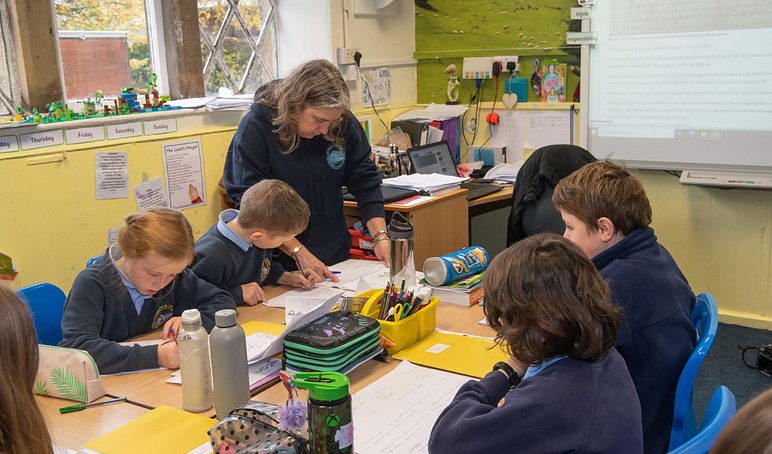
Kim: Some neurodiverse or complex learners were becoming “corridor children,” learning outside the room and missing high-quality first teaching. We created low-stimulus spaces already on site and kept pupils digitally connected to the live class via Teams. The TA acts as a facilitator — not the instructor — so the teacher remains central. Pupils report feeling calmer and more able to concentrate yet still take part in class talk and peer work. Engagement has improved, disruptions are fewer, and outcomes are rising. It’s sustainable because we used existing tech and rooms, and it aligns with guidance to keep access to high-quality teaching.
John: How did you get teachers and TAs comfortable with the practicalities?
Sophie: Trial and error, plus targeted training. We moved from screen-share only, to a second device angled at the teacher, and even peer-to-peer interactions via the laptop. It’s not one-size-fits-all — e.g., for some learners with ASD, 2D interaction didn’t help — so we adapt with external professionals. But when it fits, it really helps pupils flourish.
John: Tell me about your SEND & Well-being Hub.
Anna: We built a Padlet-based “one-stop” local-offer style hub. AI helped us collate and organise clear, accessible guidance — sections for SEMH, health, neurodiversity, useful videos — plus profiles for linked practitioners. Parents use it to navigate pathways (like neurodevelopmental assessments) before meetings, which saves SENCO time for classroom support and makes conversations more informed. Feedback’s been very positive.
John: Final thought — what’s the biggest difference this has made for SEND at St Mary’s?
Louise: Time and equity. By tightening universal provision, using data to plan smarter, and keeping teachers central — whether in the room or via DCC — we’ve reduced barriers, so more children feel included and capable. And every hour we save on admin goes back into what only humans can do: relationships, encouragement, curiosity.
This website collects a number of cookies from its users for improving your overall experience of the site.Read more