Home

Research School Network: Authentic Problem Solving Starts with the Teacher In this blog Katherine Milner considers the importance of teachers experiencing problem solving to better support their learners

Blog


Authentic Problem Solving Starts with the Teacher

In this blog Katherine Milner considers the importance of teachers experiencing problem solving to better support their learners

by North Yorkshire Coast Research School
on the

Katherine Milner headshot

Katherine Milner

Evidence Lead in Education

Katherine is a primary mathematics consultant and is an experienced work group lead, working for the North Yorkshire Coast Research school alongside Kelly Duke delivering twilights and working on transition projects. Most recently Katherine has been part of the EEF Maths Guidance Panel.

Read more aboutKatherine Milner
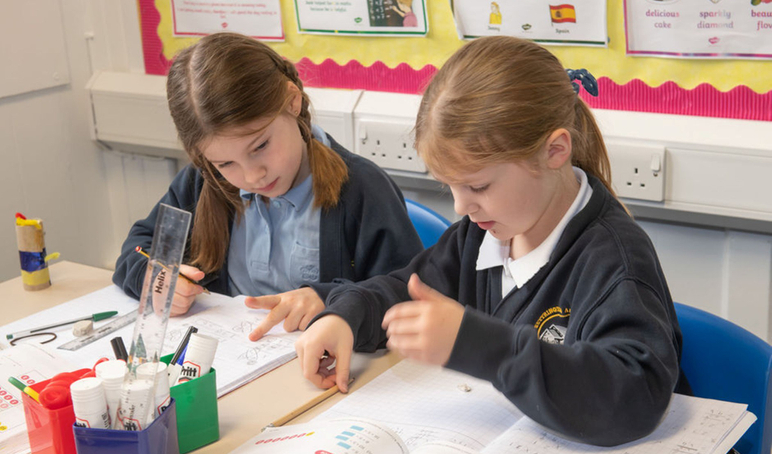
KM blog image 1

Problem solving has been listed as one of the 3 aims of the national curriculum for primary mathematics for more than a decade yet it still often has a reputation as being a tricky aspect of the curriculum. But why might this be?

The reasons are varied but one might be due to the uncertainty of the approaches that children may use to solve a given problem, particularly if it is open-ended.

The EEF mathematics guidance report for KS2 and KS3 recommends that teachers select genuine problem-solving tasks that pupils do not have well-rehearsed, ready-made methods to solve’ and recognises these tasks as being authentic problem solving (as opposed to learners merely carrying out a previously taught procedure or algorithm to obtain a solution). However, as a result of doing so, learners are likely to take a variety of approaches. 

This diversity of thinking can be particularly valuable for pupils experiencing socio-economic disadvantage, as it creates opportunities to draw on and value different ways of reasoning rather than teaching a single method. Teachers therefore need to be prepared to recognise and build upon a range of strategies whilst ensuring that appropriate support is available when learners encounter difficulties.

This may lead to teachers feeling uncertain about the direction in which the lesson will go and what learning will take place. It may also result in teachers being unsure of how to support learners if they are stuck and how to facilitate any whole class discussions within the lesson.

As a way of assisting with this, Mason (2020) highlights the importance of teachers experiencing problem solving for themselves:

To keep myself alert to the sort of situations pupils are going through, I’ve got to keep experiencing these things: struggling, making mistakes, making conjectures, modifying those conjectures and then re-modifying them.”


For example, if planning to use one of the many problem solving tasks from nrich such as the one below, it would be beneficial for the teacher to attempt the problem for themselves and reflect on their approach as part of the planning and preparation of the lesson(s).

KM blog image 2

Chapman (2015) emphasises this approach, stating Teachers proficiency in problem solving is important for them to be able to interpret students’ unusual solutions, understand implications of students’ different approaches , whether they may be fruitful and, if not, what might make them so; and make connections among the mathematics in a variety of problems or a variety of solutions to the same problem.”

Practical ways of doing so may include:

- Spend some time attempting the problem for yourself, not with learners in mind, simply thinking about your own way of working
- Resist the temptation to look at solutions in published materials until you have attempted some problem solving for yourself
- Compare your approach to a published one – what is the same? What is different?

The purpose of attempting to solve the problem ourselves is not to know what to then teach (after all, this wouldn’t be problem solving) but to develop an awareness of the possible approaches and be able to anticipate them.


References

Chapman, O. (2015) Mathematics teachers’ knowledge for teaching problem solving LUMAT International Journal on Math, Science and Technology Education 3 (1):19 – 36


Mason, J. in Grane, C. and McCourt, M. (2020) Mathematical Tasks The Bridge Between Teaching and Learning John Catt Educational Ltd Woodbridge

https://nrich.maths.org/problems/sealed-solution

This website collects a number of cookies from its users for improving your overall experience of the site.Read more