Home

Research School Network: Transitioning with Trust How to give a supported start to children and families

Blog


Transitioning with Trust

How to give a supported start to children and families

by Newcastle Research School
on the

Sarah Photo

Sarah Stock

Director of Newcastle Research School

Sarah is the Director of Newcastle Research School and the Primary School Improvement Lead for NEAT Academy Trust.

Read more aboutSarah Stock

Sarah Stock, Director of Newcastle Research School, shares Early Years leads across a trust have developed a transitional approach across Early Years to ensure that all children and families have a supported start.

NEAT Academy trust is an inclusive trust serving communities in areas of high deprivation. We work with our pupils, families and communities to know each other well and ensure that all our pupils, including those from disadvantaged backgrounds, enjoy and achieve. The recent Education Policy Institute Report highlights the disadvantage gap nationally and regionally showing that this gap is already evident at the end of the Reception year. It is essential that we ensure all pupils and families have a supported start and develop key relationships.

Exploring the evidence


Birth to Five Matters shares that high-quality transitions recognise the importance of feeling known”. The key to a high-quality transition for all children in the early years is ensuring continuity between home, key people and all the settings that make up children’s individual learning journeys.

There is a growing body of research evidence that tells us the importance of transitions to support a positive start to school. Babić (2017) shares the importance of transition that will benefit a child’s feeling of being safe, secure, develop a sense of belonging and learning, as well as building children’s social and emotional skills.


There is research that recommends approaches that have potential to improve outcomes. The Early Years EEF Toolkit highlights that parental engagement approaches can impact on progress of up to +5 months. These positive effects have been detected for early reading outcomes as well as early language and number skills.

How can we effectively plan?


Within the foundation stage, children experience frequent transitions between settings which are significant periods of change involving a different key person, change of routine and relationships. Across NEAT Academy Trust we realised that we needed to approach this transitional phase not as a single event but as a process to ensure that children and families were reassured of what would happen and why, as soon as they receive confirmation of a place.

Joanne Eager – Nursery and Reception teacher at Whitehouse Primary School, shares the importance of planning ahead for their new intake.


As an experienced Early Years teacher, I know that moving schools and settings can be a nervous time for all. Planning ahead with key dates and events supported myself and the school’s senior leadership team in planning effectively to ensure that our approach to transition met the needs of our children and families. This ensured that we had the time to connect with families and identify the level of support needed for our children so that they had a settled start.

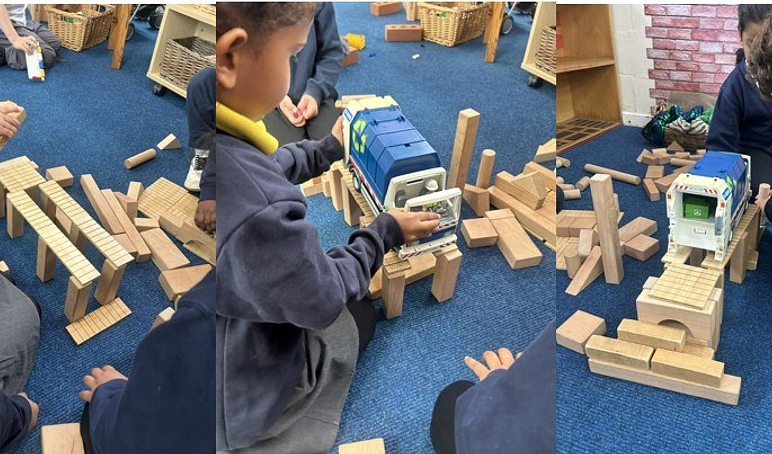
IMG 3091

As Early Years leads we collaborated and shared best practice from across our schools to inform our collective approach. For each event within our transitional approach we identified what its key purpose was and how it would support getting to know our families. For example, utilising the Key Person Approach to build strong relationships. Within our trust, the Key Person Approach offers the opportunity to create a triangle of trust’ between the child, the home and the setting, helping to reduce the impact of transition on all involved and helping positive relationships to flourish.

Carole – Ann Raper – Early Years Lead at Tyneview Primary School, shares the impact of the transitional approach across her Early Years provision.


Our children, families and staff have had a positive start to the year. The range of approaches we used ensured that families had the opportunity to know our school really well and start to develop crucial relationships with their key person. Families were aware of our key routines and could talk with their children and show pictures and videos of what school would be like.

Ensuring a positive start


Our transitional approach had to meet the needs of all our children and families, some of whom were new to the school whilst others were transitioning internally from one nursery space to another within the nursery provision. To help our families and to develop relationships and ensure that families felt connected and supported we devised 3 tier strategy that was communicated to all:

Universal offer:
for all children and families who were starting in September 

Targeted offer: for children and families who were new to the school and were starting in September

Bespoke offer:
for children and families who need a tailored approach to meet their child’s needs.

The table below outlines our tiered approach across three phases.

Table

Our transitional approach supports us in making essential connections so that when children and families start we have developed those vital relationships to provide reassurance to both children and families.

Reflections


How do you approach transitions across the Early Years?

Further reading


Early Education. 2020 Birth to 5 Matters: Non-Statutory Guidance for the Early Years Foundation Stage, St Albans, UK: Early Education.


Babić, Nada. 2017. Continuity and Discontinuity in Education: Example of Transition from Preschool to School.” Early Child Development and Care

This website collects a number of cookies from its users for improving your overall experience of the site.Read more