Press Release
Early Years
Proud to be part of the RISE Reception Networks Programme
A national RISE initiative aimed at improving the quality of reception year
Hampshire Research School
—
Blog
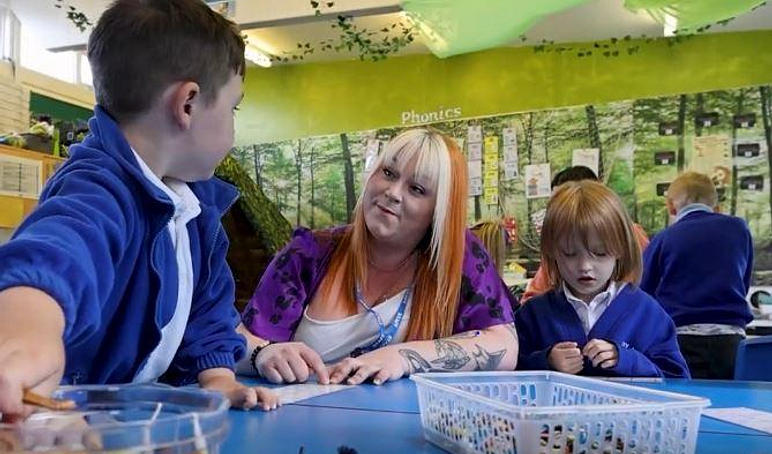
Primary school teacher, Jess Claxton, who is hearing impaired, sat down with Charlotte Chessell…

Share on:

by Hampshire Research School at Front Lawn Primary
on the

Teaching is a profession that relies heavily on communication. For Jess, a dedicated teacher with a hearing impairment, navigating the classroom comes with unique challenges — but also innovative solutions and supportive strategies that make her work possible and fulfilling.

Understanding the Impact of Hearing Impairment in Teaching
Jess has been hearing impaired since she was eight years old. Even with state-of-the-art hearing aids, she explains that her hearing is not “perfect” and certain sounds, particularly low tones, remain difficult to decipher. This affects her both in daily life and in her professional environment. For example, Jess sometimes mixes up similar-sounding words or struggles to follow conversations if people speak from behind or don’t clearly articulate their words.
In the classroom, these challenges can manifest in different ways. Children may become frustrated if Jess doesn’t immediately understand what they are saying, and she must rely on lip reading, contextual cues, and a strong sense of classroom dynamics to interpret speech. Despite these challenges, Jess has developed strategies to manage her hearing impairment effectively. She tunes into her students, observes their body language, and often relies on familiar patterns to understand communication, ensuring that the classroom remains a smooth and engaging learning environment.
Jess also emphasises the importance of openness. She tells her students about her hearing impairment in a way that’s relatable and even fun. By explaining that she sometimes can’t hear without her hearing aids, she encourages children to be patient and mindful when speaking. This transparency not only builds understanding but also normalizes discussions about disabilities for her students.
Strategies for Support and Adaptation
The school has implemented several practical measures to support Jess, demonstrating how small adaptations can make a significant difference. For example:
Jess also highlights the importance of confidence and communication. She informs parents and colleagues about her hearing impairment upfront, explaining that she may need them to speak clearly or repeat information. This approach reduces misunderstandings and fosters a culture of patience and inclusion.
The Role of Personal and Institutional Support
Jess reflects on the changes in societal understanding of disabilities over the years. Early in her career, she was hesitant to disclose her hearing impairment, fearing judgment or misunderstanding. Today, she feels empowered to communicate her needs openly.
Her experience suggests that support works best when it is both personal and institutional:
She also raises an important point about choice: staff with disabilities should be able to decide if and how their needs are shared with colleagues. A flexible approach that respects privacy while offering support can empower educators to perform at their best without unnecessary stress or embarrassment.
Lessons for Schools and Educators
Jess’s story offers valuable insights for schools seeking to support staff with hearing impairments or other hidden disabilities:
Jess’s experience demonstrates that while hearing impairments present real challenges in teaching, these can be effectively managed through a combination of personal strategies, supportive colleagues, and thoughtful institutional policies. Her story underscores the importance of awareness, inclusion, and proactive solutions in education, ultimately showing that all students and staff benefit when communication barriers are addressed thoughtfully.
By sharing experiences like Jess’s, schools can foster environments where diversity is embraced and all educators — regardless of ability — can thrive.
This website collects a number of cookies from its users for improving your overall experience of the site.Read more