Home

: The power of a conversation: About neurodiversity and professional development Jenn Sills continues the series by talking with new Deputy Director Sarah Cooksley on a matter close to her heart

Blog


The power of a conversation: About neurodiversity and professional development

Jenn Sills continues the series by talking with new Deputy Director Sarah Cooksley on a matter close to her heart

by Gloucestershire Research School at The GLA Trust
on the

Jenn

Jenn Sills

Deputy Director of Gloucestershire Research School and Trust Social Justice Lead at The GLA Trust

Read more aboutJenn Sills
SC Headshot

Sarah Cooksley

Deputy Director of Gloucestershire Research School and Head of Learning and Participation at Cheltenham Festivals

Read more aboutSarah Cooksley

Recently, while delivering training in a school, I asked staff to read a short blog before discussing its key messages in groups. One colleague quietly turned the paper over and didn’t engage with the reading. During the discussion, however, they listened, contributed confidently and fully engaged with the rest of the session.

Afterwards, I checked in with them. They explained that, because of their additional needs, reading and processing a blog in that context was challenging, whereas hearing the key messages through discussion enabled them to participate successfully.

The conversation stayed with me. As teachers, we routinely adapt learning so that pupils can access it successfully. But how often do we apply the same thinking when planning professional development for adults?

I took this question to Sarah Cooksley, Deputy Director at Gloucestershire Research School. As both an experienced trainer and an adult with diagnosed ADHD, she offered valuable insights into how we can make professional development more accessible and effective for all.

Sarah’s starting point was something deceptively simple: in education we routinely consider the different needs of children when planning and delivering learning, but sometimes forget that ​“adults are just bigger children”. Neurodivergence does not disappear in adulthood and, if we want professional development to lead to improvements in practice, we need to consider how the adults in the room access, process, retain and ultimately act on the information we are sharing.

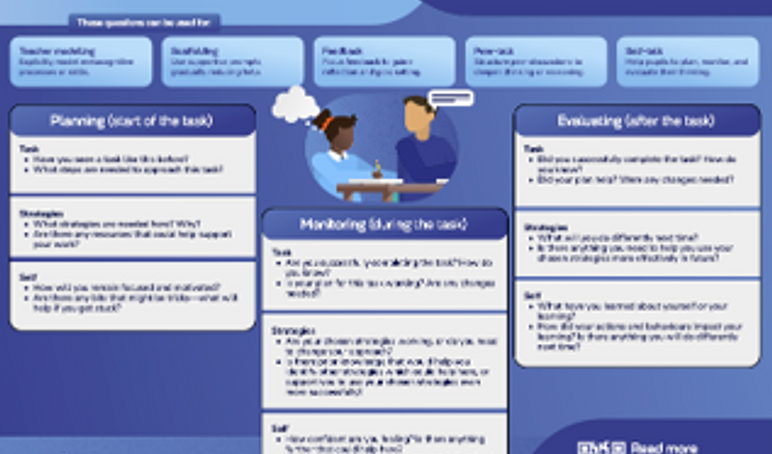
Effective PD mechanisms poster

Using the mechanisms identified in the EEF’s Effective Professional Development guidance as a lens for our conversation, Sarah and I reflected particularly on managing cognitive load. The EEF identifies this as one of the mechanisms which supports the building of knowledge, alongside other mechanisms which develop teaching techniques and embed practice. Sarah reflected on her own experience of professional development as a neurodivergent adult, recalling sessions where she was expected to sit silently for long periods or process large amounts of text from a screen. She was not a teacher who did not want to learn; in fact, she was ​“desperate to be better”, but the way the professional learning was delivered sometimes created additional barriers to doing so.

This brought us back to the experience that prompted our conversation. In the past, someone who put their head down, did not look at the board or turned over a piece of paper might simply have been perceived as disengaged. Sarah and I discussed the importance of remaining curious about what we observe rather than making assumptions about what it means. As trainers, how people respond to what we are delivering is something we need to notice, reflect on and respond to.

For me, the most immediate impact of the original conversation has been to think differently about the choices I make when planning training. Rather than assuming a blog, video or activity will work for everybody, I now think more carefully about how it might land with a range of adults. This might mean providing a pre-read, identifying the most important section of a longer document, sharing a summary of the key messages or providing different ways to access the same learning. The aim is not to remove a valuable activity because it may not work for everybody, but to create enough openness and flexibility for people to engage with the intended learning successfully.

Other practical tips to manage cognitive load;

• Keep slides clean and focused on key learning
• Be explicit about the structure and timings of a session
• Sharing materials afterwards
• Give permission to move around
• Providing time to process, practise and rehearse.

We went on to discuss how effective professional development, like effective classroom teaching, should not rely simply on telling. Instruction can be followed by modelling and opportunities to practise so that participants have the opportunity to hear, see and do within the session, ensuring that adaptations are made when needed, while protecting the mechanisms that make professional development effective. These reflections connect closely to the EEF mechanisms of modelling, rehearsal and social support.

Finally, we returned to purpose. Being clear about why we are undertaking professional development, what the intended learning is and what participants will do as a result can itself remove uncertainty. Providing time to record a key takeaway or identify a realistic action also supports the EEF mechanisms of setting goals and prompting action planning. Sarah summed up the professional development that has worked best for her in three things;

Purpose - Why are we doing this?

Focus -
How are we doing it?

Specific outcomes
– What will I take it away and implement back in my practice?

For both of us, perhaps the most important outcome of our conversation was not a list of adjustments, but a change in mindset: remain curious, make the purpose clear and consider what every adult in the room needs in order to learn.

This website collects a number of cookies from its users for improving your overall experience of the site.Read more