Blog
Cross-phase
From Provision to Practice
Making Inclusion Everybody's Responsibility
Derby Research School
—
Blog
Building Better Transitions in Mathematics
Share on:

by Derby Research School
on the
In Part 1, we explored how the “transition dip” is less an inevitability and more a consequence of misalignment, particularly in curriculum.
But continuity in what pupils learn is only part of the picture.
To truly design better transitions, we must also attend to how pupils experience learning: through relationships, expectations, and the structures that shape their day-to-day classroom experience.

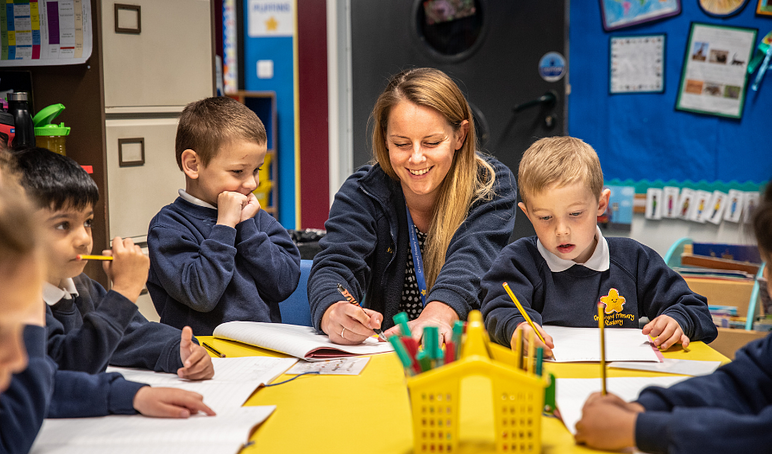
Pupils in this project spoke powerfully about the importance of feeling known. In Year 6, they described classrooms where they felt supported, able to ask questions, and confident to participate. In Year 7, many experienced a shift — more teachers, larger classes, and fewer opportunities for individual interaction.
This mattered.

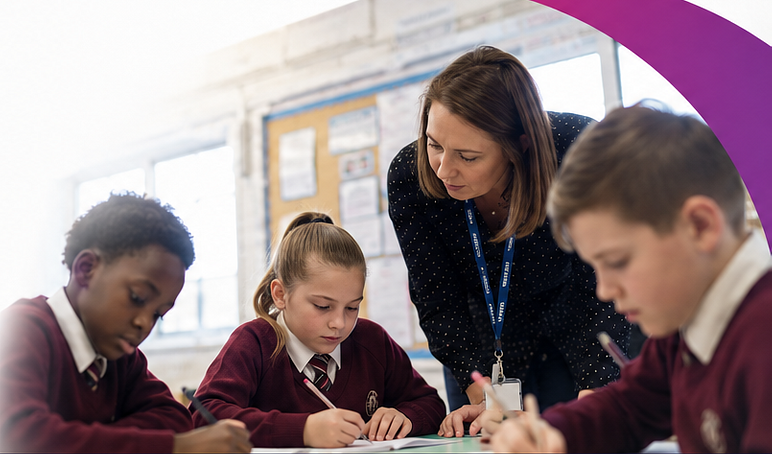
Where pupils felt less known, they were less likely to seek help or take risks in their learning. Where relationships were prioritised, pupils were more confident and more engaged.
EEF guidance emphasises that supporting pupils to build connections with peers, teachers, and the wider school is a critical component of successful transition. The findings here reinforce that this is not peripheral to learning in mathematics it is central to it.

Transition is also a cultural shift.
Pupils described Year 7 mathematics as faster-paced, more formal, and less interactive. While increased challenge is both expected and necessary, abrupt changes in expectations can leave pupils feeling uncertain about how to succeed.
In schools where expectations were clearly communicated and aligned across phases, pupils adapted more confidently. Where expectations shifted sharply, pupils described feeling “lost” or unsure of what was required.
The implication is clear: consistency in routines and expectations supports continuity in learning.
Structural decisions, particularly around grouping, also shape pupils’ experiences of transition.
In this project, schools using mixed-attainment approaches in Year 7 saw notable benefits. Pupils reported:
> stronger peer relationships
> greater opportunities for collaboration
> reduced anxiety about placement
While confidence dips were still present, they were less pronounced than in fully setted contexts.
In contrast, early setting introduced additional disruption a “second transition” as pupils adjusted to new groups, teachers, and expectations.
At the same time, pupils across all settings described increased challenge in Year 7. Where this challenge was supported through clear explanations, structured scaffolding, and strong relationships, it was experienced positively. Where it was not, it became overwhelming.
The lesson here is clear: challenge must be carefully balanced with support.

A common feature of less effective transition practice is its focus on isolated events on transition day, a bridging unit, a one-off meeting.
The evidence suggests a different approach.
Transition is best understood as a process, not a moment. It requires sustained attention to curriculum, culture, and connections over time. The EEF’s School Transitions Tool supports schools to reflect on this ongoing work — encouraging deliberate alignment across phases rather than reactive adjustments.
In the schools involved in this project, the most effective practices were those embedded over time:
> cross-phase curriculum planning
> shared professional dialogue
> consistent use of representations and language
> deliberate relationship-building in early Year 7
These are not dramatic interventions. But they are powerful.
The transition from KS2 to KS3 is often framed as a problem to be managed. But the evidence and the experiences of pupils suggest it is better understood as an opportunity to be designed.

By aligning culture, curriculum and connections and by drawing on both evidence and pupil voice we can move from managing transition to designing it.
And in doing so, we can ensure that more pupils continue their mathematical journey not with uncertainty, but with confidence.
This website collects a number of cookies from its users for improving your overall experience of the site.Read more