Podcasts
Primary
Episode 10: Mixed-Age teaching and curriculum planning in small schools with Terentius Jackson
Rachel Roach
—
Blog
Using the ShREC approach to develop our school’s approach to high quality interactions

Share on:

by Cornwall Research School
on the
Research evidence in the EEF’s Preparing for Literacy guidance report highlights that ‘language provides the foundation of thinking and learning and should be prioritised’. We decided to develop our use of the ShREC approach to prioritise high quality talk and interactions across our school.

Class Teacher, Early Years Lead , Maths Lead , EAL Coordinator at Trewirgie Infants’ School
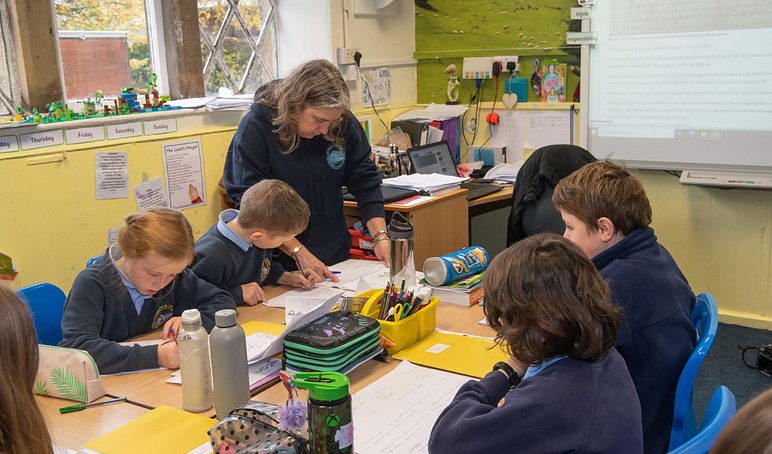
At our school, the journey with ShREC began in Nursery, where we embedded it as a core strategy for promoting high‑quality talk. This ensured that every interaction became a purposeful opportunity for communication and language development. As we saw the impact on children’s communication, we extended the approach intoReception so that all Early Years adults were working with the same shared principles and expectations. We later developed whole‑school training to explore ShREC in greater depth, emphasising the importance of high‑quality interactions not only in the Early Years but also in Key Stage 1.
Using the EEF Implementation Guidance Report as a starting point, we developed a strategic, school‑wide plan for embedding ShREC. After a whole‑school twilight session, we shared resources with all staff and provided time for adults to deepen their understanding of each strategy. To support this development, we use coaching triads, giving colleagues opportunities to observe one another, reflect on practice, and refine their use of high‑quality interactions. These collaborative observations have been particularly valuable for our Year 1 teachers, helping to strengthen continuity and support a smoother transition
for children moving up from Reception.
The next step in our implementation involves continuing to develop our parent partnerships. As we prepare for our next Reception cohort in September, we will be providing parents with information about the ShREC approach and how they can begin to support their child at home. We will also be holding a range of sessions in school and sending home weekly guidance to support parents in developing their communication and interactions with their child.

There are two key takeaways I feel are important to share. First, during the implementation process we focused closely on areas where we felt less confident, while also identifying strengths across our teaching teams. Working with colleagues to identify and support one another with the ShREC strategies they found more challenging was particularly beneficial, removing the fear of doing something “wrong” and encouraging openness about areas we wanted to strengthen.
Secondly, I want to highlight the significant impact we saw in the way ShREC strengthened relationships between children and adults. Teachers and teaching assistants feel more confident to pause, observe, and take time to communicate with children, knowing that these purposeful, high‑quality interactions are key to supporting children to develop strong communication and language skills, while also building relationships and supporting emotional development.
Overall,implementing ShREC at our school has given us a tool to build a shared approachto high‑quality talk. By spending time on staff development and creatingopportunities for collaborative reflection, we have been able to begin to embedShREC in a way that supports both children and adults, ensuring that high‑qualityinteractions remain at the heart of what we do every day.
Education Endowment Foundation. (2018). Preparing for Literacy: Improving communication, language and literacy in the early years. https://educationendowmentfoundation.org.uk/education-evidence/guidance-reports/literacy-early-years
Education Endowment Foundation. (2025). The ShREC Approach, Education Endowment Foundation. https://educationendowmentfoundation.org.uk/early-years/the-shrec-approach
Education Endowment Foundation. (2024). A School’s Guide to Implementation. https://educationendowmentfoundation.org.uk/education-evidence/guidance-reports/implementation
This website collects a number of cookies from its users for improving your overall experience of the site.Read more