Podcasts
Primary
Episode 10: Mixed-Age teaching and curriculum planning in small schools with Terentius Jackson
Rachel Roach
—
Blog
Rethinking inclusive teaching

Share on:

by Cornwall Research School
on the

Cornwall Research School Director
John Rodgers is the Director of Cornwall Research School and Assistant Principal at Mounts Bay Academy in Penzance. With 26 years of teaching experience — 21 of them in Cornwall — John is dedicated to helping schools across the Southwest of England make evidence-informed decisions. His work supports school leaders in using data to identify priorities, select appropriate strategies, and implement them effectively.
John has led professional development in areas such as metacognition, learning behaviours, SEND, attendance, and literacy. He has a keen interest in supporting schools with disciplinary literacy and has delivered region-wide programmes on vocabulary development, reading fluency, reading comprehension, oral language development and writing. Passionate about improving outcomes through evidence use, particularly for disadvantaged pupils, John is committed to building capacity in schools to create sustainable, research-informed change.
In Newlyn harbour, every boat benefits from the solid harbour wall, clear channels and reliable lights. These make safe arrival possible. Yet boats do not all come in under the same conditions. One may need a different mooring, another an extra rope, and another the guidance of a pilot. The extra help works because the harbour is sound and someone understands each vessel’s needs.
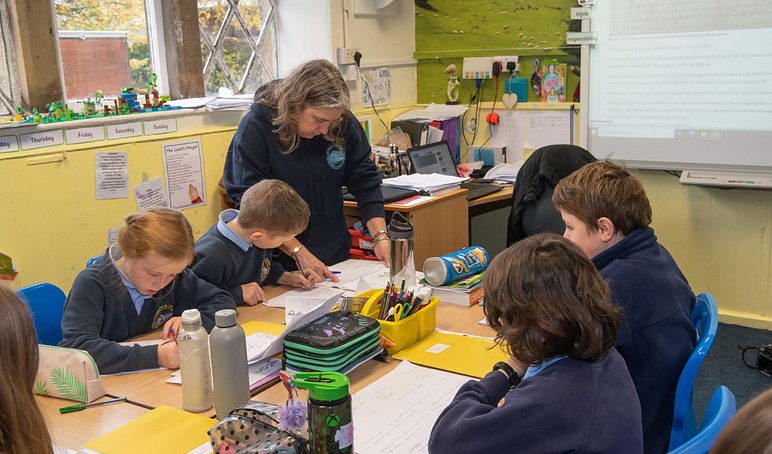
The EEF’s Guide to Inclusive Teaching offers a similar way to think about school. Its two-part model asks us to consider, together, the everyday approaches that matter all pupils, especially those with additional needs and the adaptations or additional support some pupils may also require. These are overlapping parts of one approach, not stages in a sequence. We should not ask pupils to wait for excellent universal provision before giving them support they need now.
What might a dependable classroom ‘harbour’ look like? The guide highlights explicit instruction, effective feedback, scaffolding, positive relationships and calm, predictable environments. A teacher explains a new concept clearly, models the thinking, checks what pupils understand and gives them time to practise. Feedback tells pupils how to improve and gives them an opportunity to act on it. Routines help pupils know what to expect, while relationships communicate that they belong, matter and are expected to succeed. These approaches benefit everyone but can be particularly important for pupils who face additional barriers.
Strong everyday teaching will not meet every need by itself. Some pupils require more examples, a task-specific prompt, extra opportunities to practise, or a targeted intervention. A teaching assistant can make a difference when trained, connected to the teacher’s planning and focused on the pupil’s thinking. Technology may improve access too. The question is not how many supports we can add, but whether a particular support helps a particular pupil learn.
That question demands care. An easier worksheet might produce a completed page but removing the thinking the lesson was meant to develop. Constant adult help might get a pupil through today’s task while making independent work harder tomorrow. A diagnosis can inform our understanding but cannot tell us automatically which support will work. We need to assess the barrier, keep the learning goal ambitious, and check what the pupil can understand and do over time. Supports should change as needs change.
For school leaders, the guide is also a reminder that inclusion cannot be secured through a single training day or a longer list of strategies. Staff need time to plan, discuss what they notice and develop shared expertise. Schools need a small number of priorities grounded in pupils’ needs, followed by monitoring that informs improvement rather than merely recording activity.
Newlyn’s harbour does not work because every boat receives the same rope. It works because there is a dependable place to arrive, people understand the conditions, and the right help is available when needed. Inclusive teaching asks us to build that dependable foundation in every classroom, then keep asking whether the support we provide is helping each pupil move forward.
This website collects a number of cookies from its users for improving your overall experience of the site.Read more