Blog
Cross-phase
Reteach, Don’t Repeat: When the First Explanation Doesn’t Land
Reteaching that works: why repeating explanations fails and how to adapt teaching to secure understanding
Claire Williams
—
Blog
How everyday strategies can make metacognition part of your classroom culture.
Share on:

by Alexandra Park Research School
on the

Art Subject Leader and Evidence Lead in Education
James Comer is Year 5 teacher, Art Subject Leader and Evidence Lead in Education at Alexandra Park Primary School and Research School. He has a particular interest in how developing children’s metacognition and self-regulation strategies can support educational outcomes.
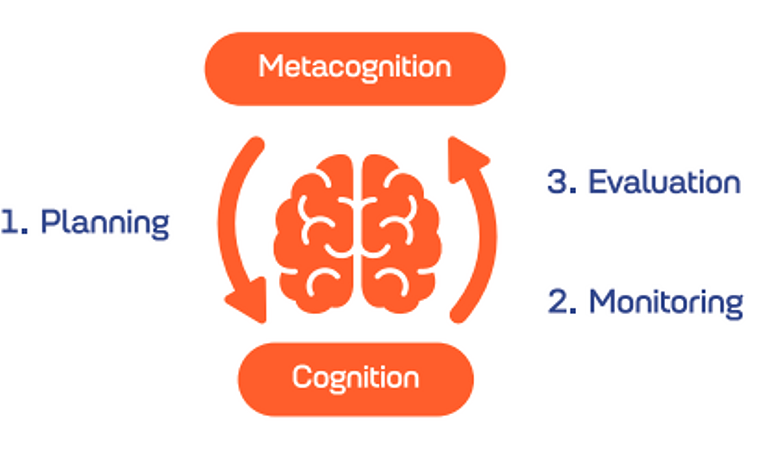
Imagine a classroom where children arrive, open their books, revisit their learning from the previous lesson, and begin to reflect on how they might improve. They then plan the most effective way to approach new content, monitor their progress throughout the task, and finish the lesson by evaluating how well they have understood that day’s material. While this might sound idealistic, it can be made possible through clear routines and high expectations.
The EEF Metacognition and Self-Regulation Guidance Report highlights the significant impact of metacognition in the classroom, showing how it can help learners become more independent, reflective, and strategic in their thinking. Yet the challenge remains: how can these habits be nurtured in classrooms where children bring such varied life experiences, including barriers linked to disadvantage and SEND?
In my Year 5 class at Alexandra Park Primary, I use three simple routines at the beginning of – and throughout – the school year to build a culture where metacognitive behaviours are valued, modelled, and embedded.
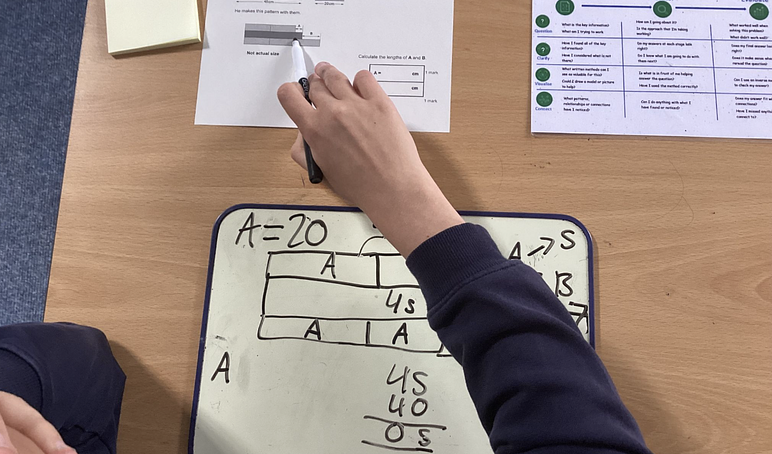
Before beginning a task, children are encouraged to plan the most effective way to achieve their goal. At first, this is modelled explicitly, making the thought processes visible through metacognitive talk. This gradually becomes a shared activity and, over time, an expectation for children to take on themselves. I also frequently question pupils about their plans, asking why they think a strategy will work or if they have considered alternatives. This process gives children the opportunity to think carefully about the best approach for success.
To support inclusion, adaptive strategies are used – such as manipulatives, dual coding, or sentence stems – so that all learners, including those with additional needs, can engage with the same high expectations.
Example:“Today, our goal is to partition 4‑digit numbers. What do we already know that could help us? Where should we start? Where in the classroom might we look for support?”

When completing activities, children are encouraged to use a purple pen as a visual prompt for monitoring and evaluating their work. I model this process clearly, thinking aloud to show the language and mindset of metacognitive reflection. Over time, the aim is for children to reach a point where taking out the purple pen and using it purposefully is automatic.
Examples of this work are frequently displayed on the classroom working wall to celebrate good practice and make learning visible. For children facing greater challenges, I often hold 1:1 discussions to guide their reflections and help build confidence.
Examples of reflections with a purple pen:
1. “I forgot to add my exchanges – I will do this next time.”
2. Adding more ambitious vocabulary.
3. Including additional historical details such as dates.

At the beginning of each lesson, children spend a few minutes evaluating their previous learning. This quick routine encourages them to respond to feedback, reflect on what went well, and avoid repeating mistakes. It also allows them to retrieve key knowledge before moving on – a powerful foundation for new learning.
At the end of the lesson, children are asked to reflect on whether they achieved the learning goal. Where children identify gaps, I note these to inform additional support and future planning. In many cases, children are praised not only for correct answers but for openly identifying and addressing mistakes, helping to normalise errors as part of the learning process.
Example: A child who had previously been reminded to use capital letters for proper nouns might correct this in purple pen and share with the class that it is their focus for improvement in the current lesson.

By establishing these routines, the aim is to provide all children – especially those facing disadvantage – with the metacognitive tools they need to reflect, plan, and adapt. While there is always more to learn, these small, consistent practices help to nurture children who can approach challenges with confidence and independence.
Further reading and links:
EEF Podcast‘Metacognition’ Evidence into Action’ (2023)
EEF, (2021) Metacognition and Self-Regulated Learning. [online] London: Education Endowment Foundation, Available at: Metacognition and Self-regulated Learning | EEF
Heron H, (2023):‘Mobilising Metacognition – A starter kit to support teacher understanding’ EEF blog April 2023 Available at : EEF blog: Mobilising Metacognition – A starter kit to support…
EEF Metacognition and self-regulation Toolkit strand
This website collects a number of cookies from its users for improving your overall experience of the site.Read more