Blog
Primary
Supporting Metacognition for Pupils with the Highest Need
What happens when our support removes thinking rather than enabling it?
Claire Williams
—
Blog
Developing mathematically fluent problem solvers through culture, metacognition and varied problem-solving experiences.
Share on:

by Alexandra Park Research School
on the

Mike has taught for 14 years and leads Maths at Alexandra Park Primary School. A Mastery Specialist, NCETM Lead, and White Rose Champion Teacher, he is passionate about making maths accessible and inspiring for all learners through evidence-informed practice.
One of the biggest things we have learned on our journey with reasoning and problem-solving is that developing mathematically fluent problem solvers is not about finding the right resource. It is about developing the right classroom culture and the right habits of thinking.
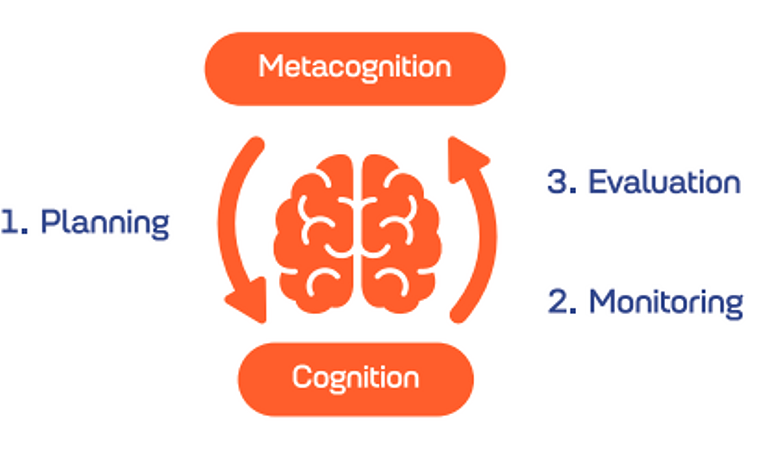
In my previous blog, I discussed our move towards a metacognitive approach built around questioning, think-alouds and structured reflection. This was achieved, in-part, through our problem-solving toolkit. But, as we continued to refine our practice, another important realisation emerged: if we wanted children to become better problem solvers, we needed to expose them to a wider range of problem-solving and reasoning experiences and explicitly teach them how to navigate them.

The EEF’s Improving Mathematics in Key Stages 2 and 3 guidance report highlights the importance of explicitly teaching pupils strategies for solving problems and helping them monitor and regulate their thinking over time. That became central to our approach.
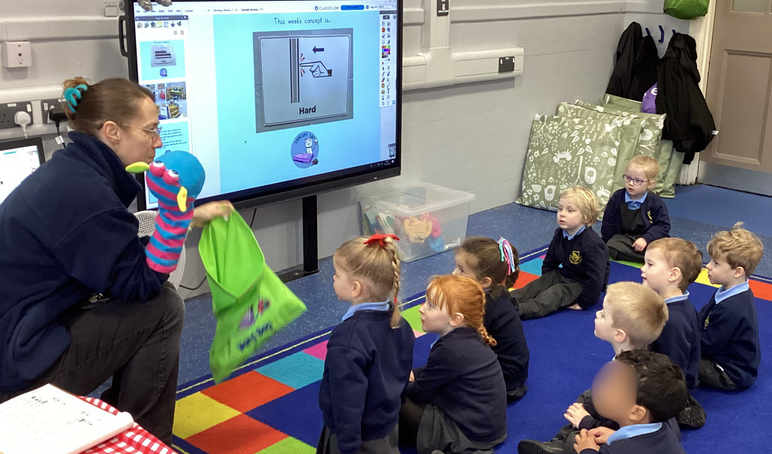
Children need small, carefully structured steps in order to internalise both the process and the thinking behind it. But this is a marathon; not a sprint. Initially, the teacher is very much the expert in the room. Through repeated think-alouds, teachers explicitly model the toolkit prompts whilst verbalising the decisions being made throughout the process. The focus is not simply on arriving at an answer, but on making expert mathematical thinking visible. Children are shown that reasoning and problem solving involve monitoring, adapting, reflecting and sometimes struggling.
Over time, responsibility is gradually released. Pupils begin using the toolkit prompts to question the teacher themselves, guiding the process through carefully structured discussion: teacher models the metacognitive thought process aloud through responses to the prompts whilst using this to solve the problem. Next, children move into paired reasoning, mimicking the previous step, using oracy talk structures and the metacognitive prompts collaboratively. Eventually, independent application of the process is targeted. Again, this four-step process is designed to take place over time. In many ways, the aim is for pupils to eventually internalise the teacher’s original think-aloud process.
Beyond these steps, variation has an important role. For variation, we utilised other complementary approaches, deliberately increasing the use of activities such as True or False, Which One Doesn’t Belong? and Could Be, Must Be, Can’t Be. These approaches encourage pupils to justify, explain, challenge and refine their thinking. Rather than racing towards an answer, children are invited to explore relationships, structures and possibilities. Discussion becomes central.

Goal-free problems became another valuable tool within our classrooms. Research into cognitive load theory suggests that novice learners often rely on “means-ends analysis” focusing heavily on the end goal whilst simultaneously trying to determine how to reach it (Sweller, 1988). This can overwhelm working memory and lead pupils to disengage.
By removing the specific goal and instead asking children to find what they can, we noticed a shift. Pupils became more willing to explore, test ideas and make connections because the pressure of “getting the answer” had been reduced. The thinking became more important than the destination.
Worked examples also played an important role in strengthening reasoning. Presenting pupils with completed, incomplete or deliberately incorrect solutions allowed children to focus less on carrying out procedures and more on analysing mathematical decisions. Similarly, concept cartoons gave pupils opportunities to compare approaches and debate which strategies were most efficient or appropriate. These discussions helped children distinguish between superficial similarities and deeper mathematical structures — something expert mathematicians naturally do.
However, we also recognised that children need opportunities to experience productive struggle. At times, beginning with a problem before any modelling allowed pupils to encounter what Bjork and Bjork describe as “desirable difficulty”. These moments encouraged children to draw upon prior knowledge, test ideas and engage in genuine reasoning before discussion and refinement took place.
Of course, this requires careful orchestration from teachers, but these moments of uncertainty were often where the richest mathematical thinking emerged. All of the above encourage pupils to move beyond superficial features and focus instead on the deeper mathematical relationships involved.

What became clear throughout this process was that variation matters enormously. If children only encounter routine problems directly linked to recent learning, they can become overly reliant on pattern spotting rather than genuine reasoning. Pupils need both routine and non-routine problems. They need opportunities to succeed, opportunities to struggle and opportunities to reflect.
Like I said before, there is no “one way”. But what we have found is that reasoning and problem solving improve most when metacognition, discussion, modelling and carefully designed experiences work together over time. The goal was never simply to help children answer problems. It was to help them think mathematically when they encountered them.
Education Endowment Foundation (EEF) (2017). Improving Mathematics in Key Stages 2 and 3. London: Education Endowment Foundation.
Bjork, R.A. and Bjork, E.L. (2011) ‘Making things hard on yourself, but in a good way: Creating desirable difficulties to enhance learning’, in Gernsbacher, M.A., Pew, R.W., Hough, L.M. and Pomerantz, J.R. (eds.) Psychology and the real world: Essays illustrating fundamental contributions to society. New York: Worth Publishers, pp. 56–64.
Sweller, J. (1988) ‘Cognitive load during problem solving: Effects on learning’, Cognitive Science, 12(2), pp. 257–285. (Sweller, 1988)
This website collects a number of cookies from its users for improving your overall experience of the site.Read more